 ONARC
ONARC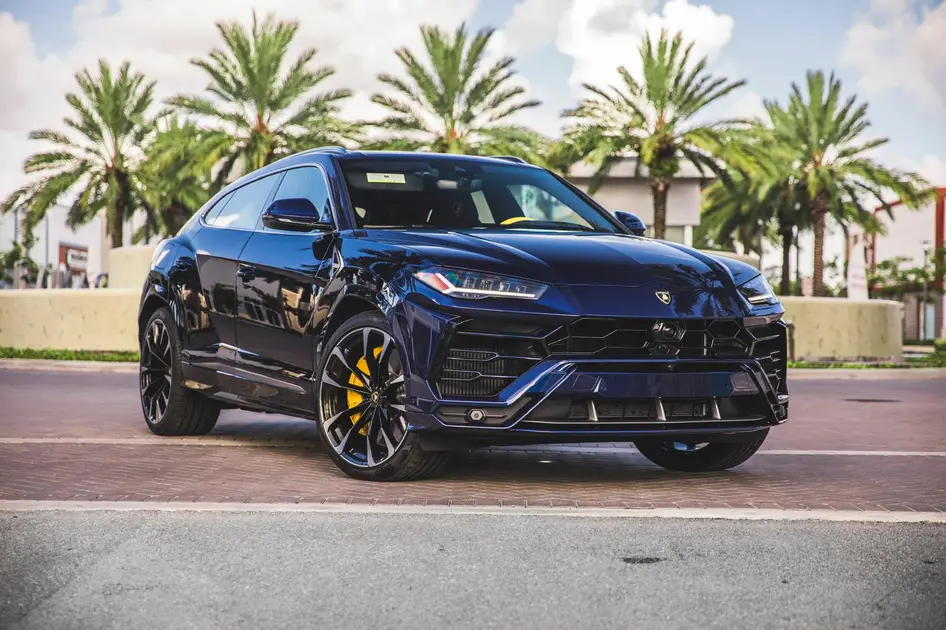
The short version: A supercar is a high-performance exotic car built primarily for speed -- think Lamborghini Huracan, Ferrari F8, McLaren 720S. Power output typically ranges from 500 to 800+ HP, with prices from $200K to $600K. A hypercar goes further: 900+ HP, $1M+ price tags, production runs under 500 units, and technology borrowed from Formula 1. Think Bugatti Chiron, McLaren P1, Koenigsegg Jesko. The gap between them is enormous -- and this guide explains exactly where the line falls, with real examples from our fleet.
What Makes a Car a Hypercar?
A hypercar is a vehicle that pushes beyond what any reasonable person would call "enough." It is the tier above supercars, and it exists for one reason: to prove what is technically possible when money is not a constraint.
There is no governing body that certifies a car as a hypercar. But within the automotive industry, the term has a clear set of requirements that virtually everyone agrees on:
- Power above 900 HP -- most hypercars produce 1,000+ HP, often using hybrid powertrains that combine combustion engines with electric motors
- Price above $1 million -- the Bugatti Chiron starts at $3 million, the Koenigsegg Jesko at $3.4 million, and the Pagani Huayra at $2.4 million
- Production under 500 units total -- not per year, total. The McLaren P1 was limited to 375. The Ferrari LaFerrari to 499. The Lamborghini Veneno to 9.
- Cutting-edge technology -- active aerodynamics that adjust in milliseconds, hybrid or full-electric powertrains, carbon-fiber monocoques, aerospace-grade materials
- Performance that exceeds anything street-legal cars need -- top speeds above 250 MPH, 0-60 times under 2.5 seconds
The practical consequence of all this is simple: you will probably never sit in a hypercar, let alone drive one. Manufacturers often require prospective buyers to already own several cars from their brand. Ferrari famously hand-picks who gets invited to purchase a LaFerrari. Bugatti requires a net worth discussion before they let you configure a Chiron. These are not vehicles you walk into a dealership and buy.
Fleet Manager's Tip
We get calls every month from clients asking to rent a Bugatti or a Pagani. The honest answer is that no legitimate rental company stocks hypercars for daily use. The insurance alone would double the rental cost, and a single parking lot scratch could mean a six-figure repair bill. What we can offer is the top of the supercar tier -- the Lamborghini Aventador at 730 HP and $1,795/day -- which delivers about 90% of the hypercar thrill at a fraction of the financial risk.
Is a Lamborghini a Supercar or Hypercar?
Most Lamborghinis are supercars. The models you see on the street, at car shows, and in rental fleets -- the Huracan and the Aventador -- are definitively in the supercar category.
Here is the breakdown of the Lamborghini models we keep in our fleet:
| Model | Engine | HP | 0-60 | Top Speed | Daily Rate | Category |
|---|---|---|---|---|---|---|
| Aventador | 6.5L V12 Nat. Aspirated | 730 HP | 2.8s | 217 MPH | $1,795/day | Supercar (top tier) |
| Huracan EVO Spyder | 5.2L V10 Nat. Aspirated | 631 HP | 2.9s | 202 MPH | $1,295/day | Supercar |
| Urus S | 4.0L Twin-Turbo V8 | 657 HP | 3.5s | 193 MPH | $1,395/day | Super SUV |
However, Lamborghini has built actual hypercars. The Veneno (2013) was limited to just 9 units at $4.5 million each, with 750 HP from a 6.5L V12. The Sian (2020) used a supercapacitor hybrid system producing 819 HP across just 63 units at $3.6 million. And the current Revuelto (2024+) is Lamborghini's first production V12 hybrid at 1,001 HP -- it is arguable whether it crosses into hypercar territory given its higher production numbers, but the technology and power output put it right on the line.
The Aventador in our fleet sits at the very top of the supercar tier. Its naturally aspirated V12, scissor doors, and 730 HP put it closer to hypercar territory than any other car you can rent in Miami. It is the most powerful, most dramatic, and most expensive vehicle in our lineup -- and there is a reason it commands $1,795/day.
How Fast Does a Car Need to Be to Be a Hypercar?
There is no official speed requirement, but the numbers tell a clear story. Every car broadly accepted as a hypercar exceeds 250 MPH top speed and hits 0-60 in under 2.5 seconds.
Here is how the speed tiers stack up:
| Tier | Typical 0-60 | Typical Top Speed | Example |
|---|---|---|---|
| Sports car | 3.5 - 5.0s | 155 - 190 MPH | Porsche 911 Carrera S (3.3s, 191 MPH) |
| Supercar | 2.7 - 3.5s | 195 - 220 MPH | McLaren 720S (2.7s, 212 MPH) |
| Hypercar | Under 2.5s | 250+ MPH | Bugatti Chiron (2.4s, 261 MPH) |
The fastest car you can rent in our fleet is the McLaren 720S, which does 0-60 in 2.7 seconds and tops out at 212 MPH. That is staggeringly fast by any road-car standard, but it still falls well under hypercar territory. The speed gap between a top-tier supercar and a hypercar is significant -- roughly 40 to 90 MPH of top speed and a full half-second off the 0-60 sprint.
For context, the Koenigsegg Jesko Absolut is engineered for a theoretical 330 MPH. The Bugatti Chiron Super Sport 300+ became the first production car to break 300 MPH. The SSC Tuatara hit 282 MPH in testing. These numbers exist in a completely different universe from even the fastest supercars.
What Is the Difference Between a Supercar and a Hypercar?
The simplest distinction: a supercar is a car built to be extremely fast. A hypercar is a car built to redefine what "extremely fast" means.
Beyond raw speed, the differences are substantial across every metric:
| Attribute | Supercar | Hypercar |
|---|---|---|
| Price range (new) | $200K - $600K | $1M - $5M+ |
| Power output | 500 - 800 HP | 900 - 1,600+ HP |
| Production volume | 1,000 - 10,000 units | Under 500 total |
| 0-60 time | 2.7 - 3.5 seconds | Under 2.5 seconds |
| Top speed | 195 - 220 MPH | 250 - 330+ MPH |
| Powertrain | Usually combustion only | Often hybrid (F1-derived) |
| Technology | Carbon ceramic brakes, active suspension | Active aero, ground-effect, e-turbos |
| Availability | Configurable to order | Invite-only / allocation list |
| Rental availability | Yes (top-tier fleets) | Almost never |
One way to think about it: supercars are the varsity team. Hypercars are Olympic athletes. Both are elite. But one group operates at a level that the other group watches from the stands.
Famous Hypercars vs Famous Supercars: A Quick Reference
If you are wondering where specific cars fall, here is a straightforward classification of the most well-known models:
Definitive Supercars
- Lamborghini Huracan -- 631 HP, 202 MPH, ~$250K new. The benchmark mid-engine Italian supercar.
- Ferrari F8 Tributo / Spider -- 710 HP, 211 MPH, ~$280K. Ferrari's mid-engine core offering.
- McLaren 720S -- 710 HP, 212 MPH, ~$300K. Arguably the best driver's car in the supercar class.
- Lamborghini Aventador -- 730 HP, 217 MPH, ~$420K. The last naturally aspirated V12 Lamborghini.
- Porsche 911 GT3 -- 502 HP, 197 MPH, ~$170K. Track-bred, naturally aspirated, purist's choice.
- Ferrari 296 GTB -- 819 HP (hybrid), 205 MPH, ~$322K. Ferrari's newest V6 hybrid supercar.
Definitive Hypercars
- Bugatti Chiron -- 1,500 HP, 261 MPH, $3M+. 500 units. The most recognizable hypercar alive.
- McLaren P1 -- 903 HP (hybrid), 217 MPH, $1.15M. 375 units. Defined the modern "Holy Trinity."
- Ferrari LaFerrari -- 950 HP (hybrid), 217 MPH, $1.4M. 499 units. Ferrari's hybrid flagship.
- Porsche 918 Spyder -- 887 HP (hybrid), 214 MPH, $845K. 918 units. The accessible hypercar.
- Koenigsegg Jesko -- 1,600 HP, 330 MPH (theoretical), $3.4M. 125 units. Swedish engineering at its peak.
- Pagani Huayra -- 730 HP, 238 MPH, $2.4M. 100 units. Hand-built Italian art on wheels.
Is a Ferrari a Supercar or Hypercar?
Most Ferraris are supercars. The cars Ferrari produces in meaningful volume -- the F8, 296 GTB, Roma, SF90 -- are supercars by every standard metric.
But Ferrari has made some of the most legendary hypercars in history. The "Holy Trinity" of modern hypercars -- the Ferrari LaFerrari, McLaren P1, and Porsche 918 Spyder -- defined the hypercar era in 2013-2015. All three used hybrid powertrains, all three were limited to under 1,000 units, and all three pushed well past 900 HP.
In our fleet, the Ferrari F8 Spyder is a supercar. Its 3.9L twin-turbo V8 produces 710 HP and launches to 60 in 2.9 seconds. That is extraordinary performance by any measure. But it is produced in the thousands, costs roughly $280K new, and uses a conventional (non-hybrid) powertrain. It sits comfortably in the upper tier of the supercar class alongside the McLaren 720S (710 HP, $1,595/day) and Lamborghini Aventador (730 HP, $1,795/day).
Can You Rent a Hypercar?
In practical terms, no. True hypercars are not available for standard daily rental anywhere in the United States, and anyone claiming otherwise should be scrutinized carefully.
The reasons are straightforward:
- Insurance -- insuring a $3 million Bugatti Chiron for rental use would cost more per month than most people's annual salary. No standard rental insurance policy covers this tier.
- Parts availability -- if a renter damages a hypercar component, the replacement part might not exist. Koenigsegg and Pagani hand-build each car. A damaged carbon fiber panel could take 3-6 months to fabricate.
- Depreciation risk -- hypercars often appreciate in value if kept in perfect condition. Every rental day adds mileage and risk that erodes that appreciation.
- Driver competence -- putting 1,500 HP in the hands of someone who drove a Camry last week is a liability no insurance company wants to underwrite.
What you can rent is the top of the supercar tier, which is where the real value lies anyway. The experience gap between a McLaren 720S (710 HP, 2.7s 0-60) and a Bugatti Chiron (1,500 HP, 2.4s 0-60) is a lot smaller than the numbers suggest. On public roads in Miami, you will never approach the limits of either car. The 720S is already faster than you can legally use, and the current McLaren rental Miami lineup is the cleanest place to compare those supercar options.
Fleet Manager's Tip
If you want the closest thing to a hypercar experience that you can actually rent, book the Lamborghini Aventador. The naturally aspirated V12, the scissor doors, the 730 HP -- it has the drama and the presence that most people associate with hypercars. It is the car in our fleet that makes other supercar renters stop and stare. At $1,795/day, it is a serious commitment, but it delivers something the other cars do not.
Drive a Supercar in Miami
Our fleet includes supercars from Lamborghini, Ferrari, McLaren, and Porsche. Real-time availability, transparent pricing, delivered to your door.
Which Cars in Our Fleet Are Supercars?
Every car in our fleet falls into one of four categories: supercar, grand tourer, luxury, or exotic SUV. Here is where the supercars sit, ranked by power output:
| Car | Engine | HP | 0-60 | Top Speed | Daily Rate |
|---|---|---|---|---|---|
| Lamborghini Aventador | 6.5L V12 | 730 HP | 2.8s | 217 MPH | $1,795 |
| Ferrari F8 Spyder | 3.9L TT V8 | 710 HP | 2.9s | 211 MPH | $1,395 |
| McLaren 720S | 4.0L TT V8 | 710 HP | 2.7s | 212 MPH | $1,595 |
| Ferrari 488 | 3.9L TT V8 | 661 HP | 3.0s | 205 MPH | $1,395 |
| Lamborghini Huracan EVO Spyder | 5.2L V10 | 631 HP | 2.9s | 202 MPH | $1,295 |
| McLaren GT | 4.0L TT V8 | 612 HP | 3.1s | 203 MPH | $1,195 |
| McLaren 570S | 3.8L TT V8 | 562 HP | 3.1s | 204 MPH | $1,295 |
| Porsche 911 GT3 | 4.0L Flat-Six | 502 HP | 3.2s | 197 MPH | $1,095 |
Every car on this list qualifies as a supercar under any reasonable definition. They are mid-engine (or rear-engine in the case of the 911), they prioritize performance above all else, and they are produced by manufacturers whose primary identity is building fast cars.
For a full breakdown of our fleet categories, including luxury sedans, exotic SUVs, and grand tourers, see our complete guide to exotic car classifications.
Frequently Asked Questions
What makes a car a hypercar?
A hypercar must have power output above 900 HP, a price tag exceeding $1 million, total production under 500 units, and cutting-edge technology like hybrid powertrains or active aerodynamics. Examples include the Bugatti Chiron (1,500 HP, $3M+), McLaren P1 (903 HP, 375 units), and Koenigsegg Jesko (1,600 HP, 125 units).
Is a Lamborghini a supercar or hypercar?
Most Lamborghinis are supercars. The Huracan (631 HP, $1,295/day) and Aventador (730 HP, $1,795/day) are supercars. Lamborghini has made limited-run hypercars -- the Veneno (9 units, $4.5M) and Sian (63 units, $3.6M) -- but these are not the models most people encounter.
How fast does a car need to be to be a hypercar?
Most hypercars exceed 250 MPH top speed and 0-60 in under 2.5 seconds, though there is no official threshold. The fastest car in our fleet -- the McLaren 720S at 212 MPH and 2.7s 0-60 -- is fast but well under hypercar territory.
Can you rent a hypercar in Miami?
No reputable company offers true hypercars for daily rental. Insurance costs, parts scarcity, and liability make it impractical. The closest experience you can get is our Lamborghini Aventador ($1,795/day) or McLaren 720S ($1,595/day) -- both of which are faster than you will ever need on public roads.
Is a Ferrari a supercar or hypercar?
Most Ferraris are supercars. The F8 Spyder (710 HP, $1,395/day) and 488 (661 HP, $1,395/day) in our fleet are supercars. Ferrari has built hypercars -- the LaFerrari (950 HP, 499 units) and Enzo (660 HP, 400 units) -- but these are collector pieces, not rentable vehicles.
What is the most popular supercar to rent?
The Lamborghini Huracan EVO Spyder ($1,295/day) is our most requested supercar. The convertible top, V10 engine, and iconic Lamborghini styling make it perfect for Miami. See our full ranking: best exotic cars for first-time renters.
Want to learn more about the cars in our fleet? Read our guide to exotic car engine types to understand what makes each supercar sound and feel different, or call (786) 949-7058 to talk to our team directly.