 ONARC
ONARC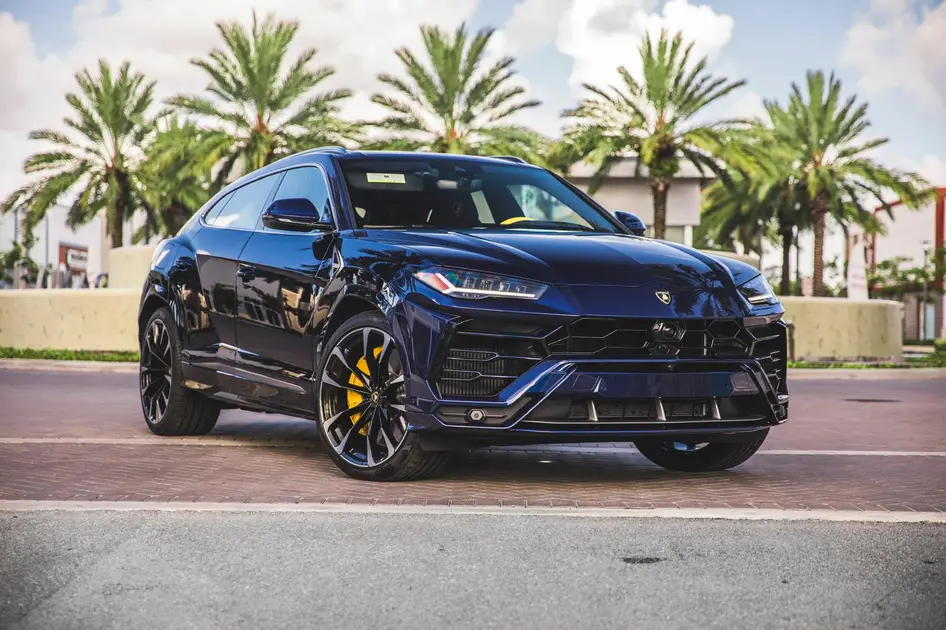
The short version: Exotic cars use six main engine types, and each one sounds, feels, and performs differently. V8s (Ferrari F8, McLaren 720S) are turbocharged powerhouses -- the most horsepower per liter. V10s (Lamborghini Huracan) are high-revving screamers with a raw, mechanical sound. V12s (Lamborghini Aventador, Rolls-Royce) deliver the smoothest power and the most prestigious sound. Flat-sixes (Porsche 911 GT3) are the purist's choice for throttle response. W12s (Bentley Continental GT) combine V12 smoothness in a shorter package. And electric motors (Tesla Cybertruck) deliver instant torque with zero engine note. This guide maps every car in our Miami exotic car rental fleet to its engine and explains what that means for your driving experience.
What Engine Does a Lamborghini Huracan Have?
The Lamborghini Huracan has a 5.2-liter naturally aspirated V10 engine that produces 631 HP and 442 lb-ft of torque. It is one of the last naturally aspirated V10s currently in production, and it is the engine that defines the Huracan experience.
A V10 is exactly what it sounds like: ten cylinders arranged in a V formation. The extra two cylinders over a V8 allow the engine to rev higher and produce a completely different exhaust note -- a sharper, more mechanical scream that climbs in pitch as the revs build. The Huracan's V10 revs to 8,500 RPM. At full throttle with the top down on the Rickenbacker Causeway, it is one of the most visceral sounds in the automotive world.
The key word in the Huracan's spec sheet is "naturally aspirated." That means no turbochargers -- the engine makes its power purely from displacement and high RPMs, without the help of forced induction. The result is a more linear power delivery. When you press the throttle, power arrives immediately and builds smoothly all the way to redline. There is no turbo lag, no sudden surge. Just a clean, progressive wall of sound and acceleration.
We keep multiple Huracan EVO Spyders in the fleet at $1,295/day, and the V10 sound is consistently the thing clients mention first after their rental. It is not the most powerful engine we have, but it is arguably the most memorable.
Why Do Ferraris Sound Different from Lamborghinis?
Because they use fundamentally different engines with different architectures, and the sound of an engine is determined by its cylinder count, layout, crankshaft type, and whether it uses forced induction.
Here is the breakdown of why our Ferraris and Lamborghinis produce such different sounds:
Ferrari F8 Spyder: 3.9L Twin-Turbo V8
The Ferrari F8 Spyder uses a flat-plane crankshaft V8. "Flat-plane" means the crankshaft pins are spaced at 180 degrees, which gives each bank of cylinders an even firing order. This produces a higher-pitched, sharper exhaust note compared to the "burble" of a cross-plane V8 (like you hear in an American muscle car). The turbos add a faint whistle under full boost but also muffle some of the high-frequency shriek that naturally aspirated Ferraris were famous for. The result: a sharp, urgent wail that builds intensity with RPM. It sounds angry and focused.
Lamborghini Huracan: 5.2L Naturally Aspirated V10
The Huracan's V10 has no turbos, so every decibel of sound comes directly from the engine and exhaust. The five-cylinder firing order per bank creates a unique frequency that sits between a V8's rumble and a V12's wail. It screams rather than sings. The sound is rawer, more mechanical, and louder -- especially with the top down. Lamborghini intentionally tunes their exhaust systems to amplify the high-frequency harmonics, which is why a Huracan at full throttle sounds like nothing else on the road.
Lamborghini Aventador: 6.5L Naturally Aspirated V12
The Aventador's V12 is a different animal entirely. Twelve cylinders fire in a smoother sequence, producing a more complex harmonic. The sound is deeper than the Huracan's V10 at idle -- a low, mechanical rumble that shakes the ground. But at high RPM, the V12 opens into a symphonic wail that is simultaneously powerful and refined. It is the most dramatic engine sound in our fleet, and it is the main reason the Aventador commands $1,795/day.
Fleet Manager's Tip
If the engine sound is the most important factor in your rental decision -- and for many of our clients, it is -- the ranking from loudest and most dramatic to most refined goes: Aventador V12, Huracan V10, Ferrari F8 V8, McLaren 720S V8, Porsche 911 GT3 flat-six. The 911 GT3 deserves special mention because its 9,000 RPM redline produces a unique buzzing wail that Porsche purists consider the finest engine sound in the world. It does not have the volume of the Italian cars, but the precision of the sound is in a class by itself.
The Complete Engine Map: Every Car in Our Fleet
Here is every vehicle in the Monarc VIP fleet mapped to its engine type, listed by configuration:
| Car | Engine | HP | 0-60 | Type | Daily Rate |
|---|---|---|---|---|---|
| V12 Engines | |||||
| Lamborghini Aventador | 6.5L V12 Nat. Aspirated | 730 HP | 2.8s | Supercar | $1,795 |
| Rolls-Royce Cullinan | 6.75L Twin-Turbo V12 | 563 HP | 4.5s | Luxury SUV | $1,395 |
| Rolls-Royce Ghost | 6.75L Twin-Turbo V12 | 563 HP | 4.6s | Luxury Sedan | $1,095 |
| Rolls-Royce Dawn | 6.6L Twin-Turbo V12 | 563 HP | 4.3s | Luxury Convertible | $1,095 |
| V10 Engines | |||||
| Lamborghini Huracan EVO Spyder | 5.2L V10 Nat. Aspirated | 631 HP | 2.9s | Supercar | $1,295 |
| Lamborghini Huracan (Black) | 5.2L V10 Nat. Aspirated | 631 HP | 2.9s | Supercar | $1,295 |
| Lamborghini Huracan EVO (Yellow) | 5.2L V10 Nat. Aspirated | 631 HP | 2.9s | Supercar | $1,295 |
| V8 Engines (Twin-Turbo) | |||||
| Ferrari F8 Spyder | 3.9L Twin-Turbo V8 | 710 HP | 2.9s | Supercar | $1,395 |
| McLaren 720S | 4.0L Twin-Turbo V8 | 710 HP | 2.7s | Supercar | $1,595 |
| Ferrari 488 | 3.9L Twin-Turbo V8 | 661 HP | 3.0s | Supercar | $1,395 |
| Lamborghini Urus S | 4.0L Twin-Turbo V8 | 657 HP | 3.5s | Super SUV | $1,395 |
| McLaren GT | 4.0L Twin-Turbo V8 | 612 HP | 3.1s | Grand Tourer | $1,195 |
| Mercedes-Benz G63 AMG | 4.0L V8 Biturbo | 577 HP | 4.5s | Luxury SUV | $895 |
| McLaren 570S | 3.8L Twin-Turbo V8 | 562 HP | 3.1s | Supercar | $1,295 |
| Mercedes-Maybach GLS 600 | 4.0L V8 Biturbo | 550 HP | 4.8s | Luxury SUV | $895 |
| Mercedes-Benz S580 | 4.0L V8 Biturbo | 496 HP | 4.4s | Luxury Sedan | $495 |
| Mercedes-Maybach S580 | 4.0L V8 Biturbo | 496 HP | 4.7s | Luxury Sedan | $795 |
| Corvette C8 | 6.2L V8 Mid-Engine | 495 HP | 2.9s | Supercar | $395 |
| Cadillac Escalade ESV | 6.2L V8 | 420 HP | 5.9s | Luxury SUV | $449 |
| Mercedes-Benz G550 | 4.0L V8 Biturbo | 416 HP | 5.6s | Luxury SUV | $895 |
| W12 Engine | |||||
| Bentley Continental GT | 6.0L W12 Twin-Turbo | 626 HP | 3.5s | Grand Tourer | $895 |
| Flat-Six Engines | |||||
| Porsche 911 GT3 | 4.0L Flat-Six Nat. Aspirated | 502 HP | 3.2s | Supercar | $1,095 |
| Porsche 911 Carrera S | 3.0L Twin-Turbo Flat-Six | 443 HP | 3.3s | Sports Car | $695 |
| Hybrid & Electric | |||||
| BMW XM | 4.4L V8 Plug-In Hybrid | 644 HP | 3.7s | Performance SUV | $895 |
| Tesla Cybertruck Cyberbeast | Tri-Motor Electric | 845 HP | 2.6s | Electric Truck | $495 |
| BMW i8 | 1.5L 3-Cyl Plug-In Hybrid | 369 HP | 4.2s | Hybrid Sports Car | $495 |
What Is the Best Engine for a Sports Car?
There is no single best engine -- it depends entirely on what you prioritize. Each configuration delivers a fundamentally different driving experience. Here is what each engine type does best:
Naturally Aspirated V12 -- For Drama and Prestige
The V12 is the engine of kings. Twelve cylinders fire in an overlapping sequence that produces the smoothest, most refined power delivery of any combustion engine. The Lamborghini Aventador's 6.5L V12 revs to 8,500 RPM with a sound that starts as a mechanical rumble and builds into a full orchestral wail. Rolls-Royce uses twin-turbo V12s in the Ghost and Cullinan tuned for silent power delivery rather than theater. V12s are the most prestigious engine type and the most expensive to manufacture.
Naturally Aspirated V10 -- For Raw Sound and Emotion
The V10 sits in a sweet spot between the V8's punch and the V12's refinement. The Lamborghini Huracan's 5.2L V10 is the engine that car enthusiasts describe as "screaming." It does not have the smooth build of a V12 or the instant shove of a turbo V8 -- it has a raw, mechanical intensity that rewards high RPMs. The V10 is disappearing from production cars as emissions regulations tighten, which makes the Huracan's engine increasingly special. It may be the last naturally aspirated V10 Lamborghini ever makes.
Twin-Turbo V8 -- For Maximum Power Per Liter
Modern twin-turbo V8s produce absurd power from relatively small displacement. The Ferrari F8's 3.9L V8 makes 710 HP -- that is 182 HP per liter, a figure that would have been impossible 20 years ago. The McLaren 720S also makes 710 HP from its 4.0L twin-turbo V8; compare the broader McLaren rental Miami lineup when that turbocharged V8 feel is the priority. Twin-turbo V8s deliver the strongest mid-range torque and the hardest acceleration. The tradeoff is slight turbo lag at very low RPMs and a somewhat muted sound compared to naturally aspirated engines.
Naturally Aspirated Flat-Six -- For Driving Purity
The Porsche 911 GT3's 4.0L flat-six is the engine that driving purists worship. "Flat-six" means the cylinders are horizontally opposed -- three on each side -- which gives the engine a lower center of gravity and a distinctive buzzing exhaust note. The GT3 revs to 9,000 RPM naturally aspirated, and every increment of throttle produces an exactly proportional increase in power. There is zero lag, zero delay. It is the most telepathic engine in the fleet, and the reason the GT3 costs $1,095/day despite "only" having 502 HP.
Fleet Manager's Tip
First-time exotic renters almost always gravitate toward the highest HP number. But experienced car enthusiasts often prefer the Porsche 911 GT3 over cars with 200 more horsepower because the naturally aspirated flat-six delivers a driving experience that turbocharged engines cannot replicate. If you have driven fast cars before and want to feel every nuance, the GT3 is the choice. If you want the biggest rush of acceleration and the loudest exhaust note, the Huracan V10 or Aventador V12 is the choice.
Hear These Engines in Person
V8, V10, V12, flat-six -- the only way to truly understand the difference is behind the wheel. Browse our fleet and pick your engine.
What Is the Difference Between Naturally Aspirated and Turbocharged?
This is the single most important distinction in exotic car engines, and it affects everything from sound to throttle response to how the car feels at different speeds.
Naturally aspirated means the engine breathes air on its own. Air enters the cylinders at atmospheric pressure, mixes with fuel, and combusts. The only way to make more power is to add more cylinders or increase displacement. Naturally aspirated engines rev higher, respond to throttle inputs instantly, and typically produce a louder, more characterful exhaust note. The Lamborghini Huracan V10, Lamborghini Aventador V12, and Porsche 911 GT3 flat-six are all naturally aspirated.
Turbocharged means exhaust gases spin a turbine that forces additional air into the cylinders. This produces significantly more power from a smaller engine. The Ferrari F8's 3.9L V8 produces 710 HP -- a naturally aspirated 3.9L engine would produce maybe 400 HP. The tradeoff is slight turbo lag (a brief delay between pressing the throttle and feeling the full power) and a somewhat damped exhaust sound. The Ferrari F8, McLaren 720S, and McLaren 570S all use twin-turbo V8s.
In practical terms on Miami streets, the difference matters most at low speeds and partial throttle. When you blip the gas pulling away from a light, a naturally aspirated engine responds instantly. A turbocharged engine has a split-second pause before the turbos spool. At full throttle, the turbo cars actually accelerate harder because they produce more peak power and torque.
What Is a W12 Engine?
A W12 is a twelve-cylinder engine arranged in a W shape -- essentially two narrow-angle V6 engines joined on a single crankshaft. The only W12 in our fleet is the Bentley Continental GT's 6.0L twin-turbo unit, which produces 626 HP and 664 lb-ft of torque.
The advantage of the W12 layout is packaging: it is shorter than a traditional V12, which allows Bentley to fit twelve cylinders into a front-engine car without an impossibly long hood. The result is V12-level smoothness and refinement in a package that also has room for four passengers and a usable trunk. The Continental GT's W12 does not scream like the Aventador's V12 -- it surges. The power delivery is relentless and effortless, like being pushed forward by a wave.
At $895/day, the Continental GT is the only twelve-cylinder car in our fleet under $1,000/day. It is the pick for clients who want the prestige of a twelve-cylinder engine in a car that is comfortable enough for a full day of driving from Miami to Naples and back.
Frequently Asked Questions
What engine does a Lamborghini Huracan have?
A 5.2-liter naturally aspirated V10 producing 631 HP. It revs to 8,500 RPM and is one of the last naturally aspirated V10s in production. Available in our fleet as the Huracan EVO Spyder at $1,295/day.
Why do Ferraris sound different from Lamborghinis?
Different engines. The Ferrari F8 uses a 3.9L twin-turbo V8 (flat-plane crank, sharp wail). The Lamborghini Huracan uses a 5.2L naturally aspirated V10 (raw mechanical scream). The Aventador uses a 6.5L naturally aspirated V12 (symphonic and deep). Engine configuration, displacement, forced induction, and exhaust design all create unique sound signatures.
What is the best engine for a sports car?
It depends on your priority. V12 for drama and prestige. V10 for raw sound and emotion. Twin-turbo V8 for maximum acceleration. Naturally aspirated flat-six for the purest driving feel. Each engine type has passionate fans for valid reasons. See the full breakdown above.
What engine does a Ferrari have?
Our Ferraris both use 3.9L twin-turbo V8s: the F8 Spyder at 710 HP and the 488 at 661 HP. Ferrari also makes V12 and V6 hybrid engines in other models. Ferrari's V8s use a flat-plane crankshaft for a higher-pitched sound than American V8s.
Do any exotic cars have V6 engines?
Yes. Ferrari's 296 GTB uses a V6 hybrid for 819 HP combined. The Porsche 911 Carrera S ($695/day) in our fleet uses a 3.0L twin-turbo flat-six producing 443 HP -- technically a horizontally opposed six rather than a V6, but the same cylinder count.
Which engine is loudest?
The naturally aspirated engines are always louder than turbocharged ones, because turbochargers act as mufflers. In our fleet, the loudest car is the Lamborghini Aventador (6.5L V12), followed by the Huracan (5.2L V10). The quietest is the Rolls-Royce Ghost -- its twin-turbo V12 is deliberately engineered to be nearly silent.
Want to understand how our fleet breaks down by category? Read What Is an Exotic Car? for category definitions, or Supercar vs Hypercar to understand where performance tiers begin and end. Call (786) 949-7058 to talk through which engine type suits your trip.